



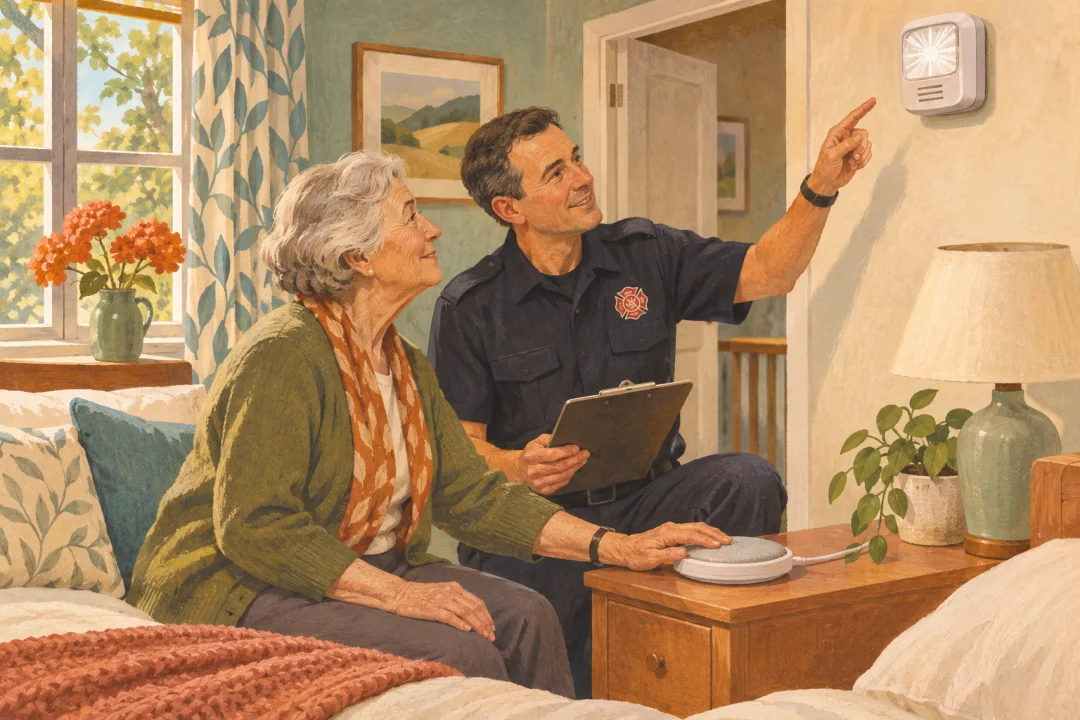
These examples detect different hazards. Both send a warning onward to compatible receivers. Ask a local professional to specify the detectors, signal devices and approved versions needed for your home.
| Device | Bellman Visit BE1481 | Bellman Visit BE1555 |
|---|---|---|
| What triggers it | Bellman Visit BE1481An optothermal smoke alarm detects smoke and smouldering fires. Bellman lists BE1481 and BE1481-DE. Confirm the approved local version with the installer. | Bellman Visit BE1555This is an electrochemical carbon monoxide alarm. Bellman lists the BE1555 for Europe only. For other markets, ask for locally approved CO detection and accessible notification. |
| How the signal reaches you | Bellman Visit BE1481It transmits a smoke alarm to a compatible Visit receiver. The bedroom light or shaker and its power supply need to be specified separately. | Bellman Visit BE1555A CO alarm is relayed to a compatible Visit receiver. Ask the installer to identify every device needed to make the bedroom signal perceptible without hearing aids. |
| What to check at home | Bellman Visit BE1481Ask the installer to demonstrate the prescribed end-to-end test and identify which signal means smoke and which means a device fault. | Bellman Visit BE1555Follow the manufacturer’s test instructions with the installer. Record the device replacement date and who will maintain the system. |
Smoke and carbon monoxide alarms you can notice at night
Sources
Published by Hear With Joy. Flysound commissions this journal. How we check evidence