



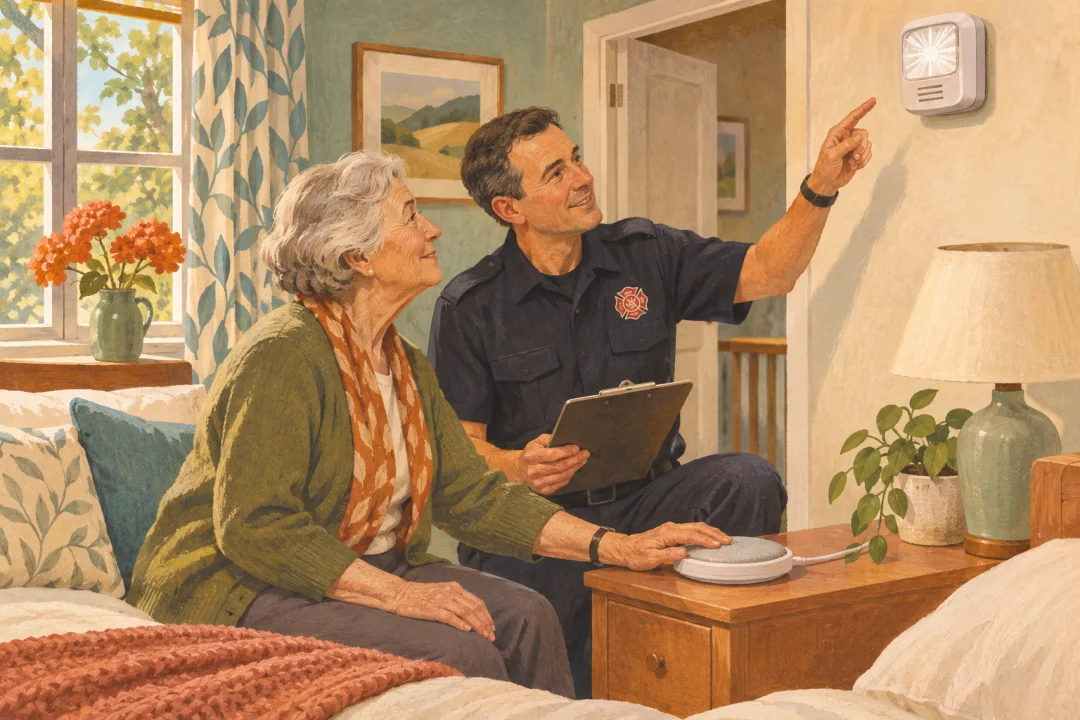
A reader’s partner heard a hallway detector before dawn while the reader heard nothing from the bedroom. The post describes a device fault. It also raises a separate planning question: how will a genuine alarm reach you when your hearing aids are off?
Identify the hazard and the signal
List the installed smoke and CO alarms, their model numbers and what each detects. Ask a qualified installer or local fire service about equipment approved for your home and location. A smoke detector and a CO detector serve different purposes. Confirm both functions on any combined unit.
Follow the warning all the way to the bed
Ask which compatible receiver flashes or drives a bed shaker when the detector alarms. With the installer, check the manufacturer’s test procedure for the complete chain, including backup power. Use the test controls specified in the instructions. The US Fire Administration recommends testing smoke alarms monthly.
Plan the response before an alarm sounds
Make an escape plan with everyone in the home. Agree on a meeting point outside and how to contact the local emergency service from safety. If a smoke or CO alarm sounds, leave for a safe place and call from outside. Treat phone notifications and hearing aids as extras alongside the dedicated warning equipment.
Alerting equipment
- Bellman Visit BE1481 — See which hazard the BE1481 detects and what receives its signal.
- Bellman Visit BE1555 — Check the BE1555 CO function and its Europe-only availability before discussing installation.
What to do next
Ask for the detector, receiver and bedroom alert to be identified individually in the installation plan.
Sources
- U.S. Fire Administration
- U.S. Consumer Product Safety Commission
- HearingTracker · Couldn't hear carbon monoxide detector
- HearingTracker · Fire alarm, smoke + c0 detector for home
- Bellman Visit BE1481
- Bellman Visit BE1555
Published by Hear With Joy. Flysound commissions this journal. How we check evidence